
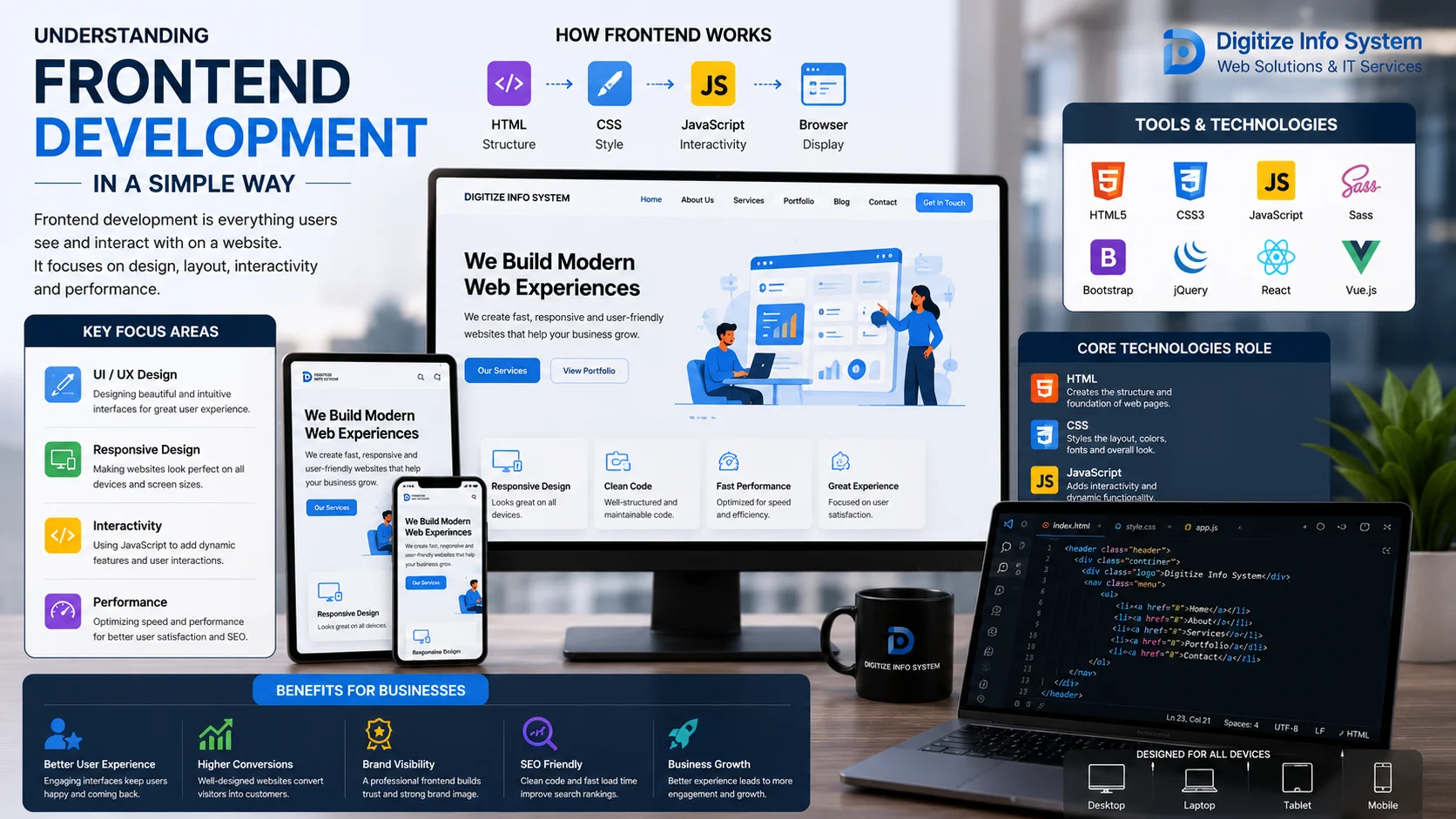
Understanding frontend development is essential for businesses, startups, and anyone entering the digital world. In simple terms, frontend development is the part of website and application development that users directly see and interact with. It acts as the bridge between users and the backend systems that power websites and web applications.
Whenever someone opens a website, clicks a button, submits a form, or browses through content, they are interacting with the frontend. A well-designed frontend improves user engagement, creates trust, and helps businesses grow faster in today’s competitive online environment.
At Digitize Info System, we specialize in creating modern frontend solutions that combine responsive design, user-friendly interfaces, and scalable technologies to deliver outstanding digital experiences.
What Is Frontend Development?
Frontend development refers to the process of building the visual and interactive part of a website or web application. It includes everything users experience directly on their screens, such as:
- Website layouts
- Navigation menus
- Buttons and forms
- Images and animations
- Interactive elements
- Responsive mobile views
- User dashboards
The main goal of frontend development is to create an engaging, responsive, and easy-to-use experience for visitors across all devices and browsers.
Why Frontend Development Matters for Businesses
A business website is often the first interaction customers have with a brand. Poor frontend experiences can lead to high bounce rates, reduced trust, and lower conversions.
Modern frontend development helps businesses:
- Create strong first impressions
- Improve customer engagement
- Increase website usability
- Enhance brand identity
- Improve SEO performance
- Boost conversion rates
- Support mobile users effectively
Frontend development is no longer just about design. It directly impacts customer satisfaction and long-term business growth.
Main Functionalities of Frontend Development
1. UI and UX Design
One of the most important aspects of understanding frontend development is learning the difference between UI and UX.
User Interface (UI)
UI focuses on the visual appearance of a website or application, including:
- Colors
- Typography
- Buttons
- Layouts
- Icons
- Visual elements
User Experience (UX)
UX focuses on how users feel while interacting with the website. It ensures the experience is:
- Smooth
- Fast
- Accessible
- Easy to navigate
- User-friendly
Strong UI/UX design helps businesses retain customers and improve digital engagement.
Learn more about professional UI/UX Designing Services for modern business applicati ons.
2. Browser Compatibility
Users access websites using multiple browsers such as Google Chrome, Firefox, Safari, Edge, and Opera. Frontend developers must ensure websites function consistently across all major platforms.
Browser compatibility involves:
- Consistent layout rendering
- Responsive behavior
- Performance optimization
- Cross-browser testing
- JavaScript compatibility
A compatible frontend ensures every user receives a smooth experience regardless of their browser choice.
3. Responsive Web Design
Responsive web design is a major component of frontend development. Websites today must work properly across:
- Desktop computers
- Laptops
- Tablets
- Smartphones
- Large screens
Responsive frontend development automatically adjusts layouts and content based on screen size and resolution.
Benefits of responsive design include:
- Better mobile usability
- Improved SEO rankings
- Higher user engagement
- Reduced bounce rates
- Enhanced accessibility
According to Google’s Mobile-Friendly Guidelines, responsive websites play a major role in modern SEO performance.
Key Technologies Used in Frontend Development
HTML – The Foundation of Frontend Development
HTML (HyperText Markup Language) is the core structure of every website. It defines the content and layout elements displayed on web pages.
HTML is used to create:
- Headings
- Paragraphs
- Forms
- Buttons
- Navigation menus
- Content sections
- Media containers
Without HTML, frontend development would not exist.
CSS – Styling and Visual Design
CSS (Cascading Style Sheets) controls the appearance and responsiveness of websites.
CSS helps developers create:
- Modern layouts
- Responsive designs
- Animations
- Color schemes
- Typography systems
- Interactive effects
Professional styling improves visual consistency and user engagement.
JavaScript – Interactive Functionality
JavaScript is the programming language responsible for adding dynamic functionality to websites and applications.
JavaScript enables features such as:
- Interactive forms
- Animations
- Live updates
- Dropdown menus
- Real-time notifications
- Interactive dashboards
- Single-page applications
Modern frontend frameworks such as ReactJS and AngularJS make frontend development faster, more scalable, and more interactive.
You can also explore official JavaScript resources through MDN Web Docs, which is one of the most trusted frontend learning platforms.
How Frontend and Backend Work Together
Frontend and backend development work together to create complete web applications.
HTTP Requests
When users interact with a website, frontend applications send HTTP requests to the backend server.
Examples include:
- Submitting forms
- Logging into accounts
- Searching products
- Loading dashboard data
- Uploading files
HTTP Responses
The backend processes these requests and returns responses back to the frontend.
This communication cycle allows websites and applications to function dynamically in real time.
Modern Frontend Development Trends
Frontend development continues evolving rapidly with modern technologies and user expectations.
Popular frontend trends include:
- Single-page applications (SPAs)
- Progressive web applications (PWAs)
- AI-powered user interfaces
- Interactive dashboards
- Component-based frontend architecture
- Headless CMS integrations
- Mobile-first design approaches
Businesses investing in modern frontend technologies can deliver superior customer experiences and stay competitive in digital markets.
Benefits of Professional Frontend Development
Improved User Engagement
Interactive and responsive interfaces keep users engaged longer and encourage deeper interaction with the brand.
Better SEO Performance
Fast-loading and responsive frontend systems improve search engine visibility and mobile rankings.
Higher Conversion Rates
Optimized frontend experiences guide users smoothly through customer journeys, improving conversions and lead generation.
Stronger Brand Trust
A modern frontend creates a professional digital presence that builds customer trust and credibility.
How Digitize Info System Helps Businesses with Frontend Development
At Digitize Info System, we build modern frontend solutions tailored to business goals and industry requirements.
Our frontend expertise includes:
- Responsive website development
- Custom web application interfaces
- React.js and Angular development
- Enterprise dashboard design
- UI/UX optimization
- Cross-browser compatibility testing
- Mobile-friendly frontend systems
We combine modern frontend technologies with business-focused strategies to help organizations create scalable and engaging digital experiences.
Explore our Web Designing Services, UI/UX Designing Services, and Mobile Application Development Services.
Conclusion
Understanding frontend development helps businesses recognize the importance of creating responsive, engaging, and user-friendly digital experiences. From UI/UX design and responsive layouts to JavaScript frameworks and browser compatibility, frontend development plays a critical role in modern business growth.
A well-optimized frontend not only improves aesthetics but also enhances performance, SEO visibility, user engagement, and long-term customer satisfaction.
At Digitize Info System, we help businesses build scalable frontend solutions designed to improve customer experiences and support digital transformation goals.
Need Professional Frontend Development Services?
Looking to build a responsive and modern frontend for your business website or application?
Contact Digitize Info System today
to discuss your frontend development requirements and digital growth strategy.
Frequently Asked Questions
Businesses can understand frontend development as the part of a website that users see and interact with. It includes the layout, buttons, images, and content that create the online experience for customers.
When explained simply, frontend development is about making sure the digital storefront is welcoming, easy to navigate, and clearly communicates the value of the products or services.
Frontend development plays a crucial role in modern websites because it directly affects how users perceive the brand. A well-developed frontend ensures the site loads quickly, works smoothly on mobile devices, and guides visitors toward taking action.
If the frontend is clunky or slow, potential customers are likely to leave before ever discovering the quality of the actual business offerings.
Businesses should prioritize frontend development based on user experience, performance, and accessibility. The most critical focus should be on ensuring key user journeys—like making a purchase or contacting sales—are effortless and intuitive.
By focusing on the elements that drive business results rather than just visual trends, companies can invest their development budget where it has the biggest impact.
Frontend development is important for customer trust because a professional, error-free website signals a reliable business. Broken links, misaligned text, or confusing navigation can make a company appear unprofessional or outdated.
A polished frontend reassures visitors that the business cares about quality and is capable of providing a secure, dependable service.
