
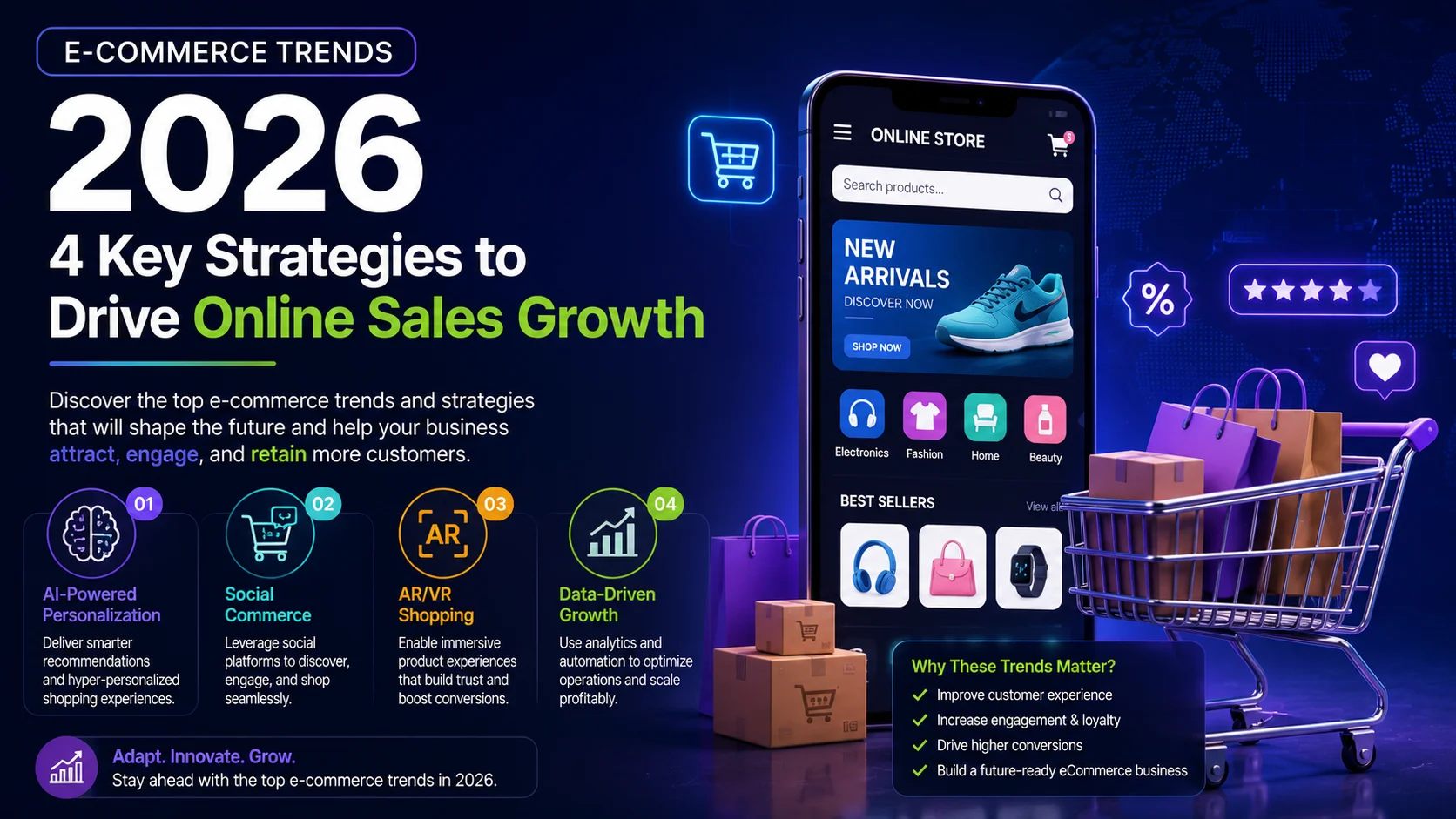
The global digital commerce industry continues to evolve rapidly, and businesses that fail to adapt risk losing market share to more innovative competitors. In 2026, simply having an online store is no longer enough. Customers now expect highly personalized experiences, seamless shopping journeys, fast-loading platforms, and intelligent digital interactions across every device and channel.
Modern consumers are more informed, more connected, and more selective than ever before. Businesses must focus on delivering exceptional customer experiences powered by automation, artificial intelligence, scalable infrastructure, and data-driven decision-making.
That’s why understanding the latest e-commerce trends 2026 is critical for businesses looking to increase conversions, improve customer loyalty, and build sustainable long-term online growth.
At Digitize Info System, we help businesses implement scalable eCommerce development solutions, enterprise digital commerce systems, and modern customer experience strategies designed for future-ready online businesses.
Why Traditional E-Commerce Strategies Are No Longer Enough
The online shopping landscape has become significantly more competitive over the past few years. Customers now expect:
- Personalized product recommendations
- Fast website performance
- Mobile-first shopping experiences
- Real-time customer support
- Secure payment systems
- Seamless social commerce integration
Businesses relying on outdated e-commerce platforms or generic shopping experiences often struggle with:
- High cart abandonment rates
- Low customer retention
- Poor mobile performance
- Limited scalability
- Reduced search visibility
- Weak conversion rates
The future of online commerce belongs to businesses that prioritize intelligent automation, customer experience optimization, and scalable digital infrastructure.
Top E-Commerce Trends 2026 Businesses Must Adopt
1. AI-Powered Hyper-Personalization
One of the most important e-commerce trends 2026 is AI-driven personalization.
Modern consumers expect brands to understand their preferences, browsing behaviors, and shopping patterns. Artificial intelligence allows businesses to deliver highly personalized shopping experiences at scale.
What AI Personalization Includes
- Dynamic product recommendations
- Personalized homepage content
- AI-powered search results
- Behavior-based email marketing
- Smart upselling and cross-selling
- Personalized promotional offers
According to McKinsey research, businesses excelling in personalization significantly outperform competitors in customer engagement and revenue growth.
Business Benefits of AI Personalization
- Higher conversion rates
- Improved customer retention
- Increased average order value
- Better customer experiences
- Stronger brand loyalty
Businesses investing in AI-driven commerce systems often combine personalization with scalable custom web portal development solutions.
2. Augmented Reality (AR) Shopping Experiences
Augmented Reality is becoming a major competitive advantage in modern digital commerce.
One of the biggest challenges in online shopping is the inability to physically interact with products before purchase. AR technology helps solve this problem by creating immersive shopping experiences.
Popular AR Commerce Applications
- Virtual furniture placement
- Virtual clothing try-ons
- AR beauty product testing
- 3D product visualization
- Interactive product demonstrations
AR-powered shopping experiences improve customer confidence and reduce uncertainty during purchasing decisions.
Benefits of AR in E-Commerce
- Reduced product return rates
- Higher customer engagement
- Improved conversion rates
- Better product visualization
- Stronger customer trust
Industries such as fashion, beauty, home decor, and consumer electronics are already heavily investing in AR-powered shopping experiences.
3. Composable Commerce and Flexible Architecture
Another major e-commerce trends 2026 shift is the rise of composable commerce architecture.
Traditional monolithic e-commerce platforms often limit flexibility, scalability, and innovation. Businesses are increasingly adopting composable commerce strategies that allow them to integrate best-in-class services using APIs and modular technologies.
What is Composable Commerce?
Composable commerce uses independent services and APIs to build flexible e-commerce ecosystems.
Instead of relying on a single platform for everything, businesses can integrate:
- Custom CMS systems
- Payment gateways
- Search engines
- Inventory management tools
- CRM platforms
- Marketing automation systems
- AI recommendation engines
Benefits of Composable Commerce
- Faster innovation
- Improved scalability
- Better customization flexibility
- Enhanced performance optimization
- Future-ready architecture
- Vendor independence
Businesses investing in composable commerce often require advanced custom software development services for integration and scalability.
4. Social Commerce and Live Shopping
Social media platforms are rapidly becoming full-scale commerce ecosystems.
Modern consumers increasingly discover, evaluate, and purchase products directly through social media platforms such as:
- TikTok
- YouTube
Social commerce eliminates friction by allowing users to purchase products without leaving their preferred platforms.
Key Social Commerce Features
- Shoppable social media posts
- Live-stream shopping events
- Influencer-driven product sales
- Integrated checkout systems
- AI-powered product discovery
According to Accenture research, social commerce is expected to continue growing significantly faster than traditional online commerce channels.
Business Advantages of Social Commerce
- Shorter customer journeys
- Higher engagement rates
- Increased impulse purchases
- Stronger influencer marketing opportunities
- Access to younger demographics
Additional E-Commerce Trends Shaping 2026
Voice Commerce Optimization
Voice search and smart assistants are influencing online shopping behaviors. Businesses are optimizing product discovery for voice-based interactions.
Sustainable and Eco-Friendly Commerce
Consumers increasingly prefer brands focused on sustainable packaging, ethical sourcing, and environmentally friendly operations.
AI Customer Support and Chatbots
AI-powered chatbots and automated customer service systems are becoming essential for improving customer support scalability and response times.
Subscription-Based Commerce Models
Recurring revenue models and subscription commerce continue growing across industries including wellness, SaaS, beauty, and consumer products.
Action Plan for Businesses in 2026
To remain competitive in the evolving digital commerce industry, businesses should focus on:
- Upgrading outdated e-commerce platforms
- Implementing AI-powered personalization
- Optimizing website speed and mobile experiences
- Investing in scalable infrastructure
- Strengthening cybersecurity and customer trust
- Integrating social commerce strategies
- Leveraging analytics and customer data
Businesses planning long-term growth should also focus on performance optimization and scalable server infrastructure solutions.
Why Businesses Choose Digitize Info System
At Digitize Info System, we help businesses build modern, scalable, and conversion-focused e-commerce ecosystems optimized for the latest e-commerce trends 2026.
Our Expertise Includes:
- Custom eCommerce development
- WooCommerce development
- Enterprise commerce platforms
- AI-powered digital commerce systems
- API integrations
- Scalable cloud infrastructure
- Performance optimization
- SEO-focused commerce architecture
- Mobile commerce optimization
- Social commerce integrations
We focus on creating future-ready digital commerce solutions that improve customer engagement, operational efficiency, and long-term revenue growth.
Conclusion
E-commerce trends 2026 clearly show that the future of online business depends on intelligent automation, personalized experiences, scalable infrastructure, and seamless digital engagement.
Businesses that invest early in AI, AR, social commerce, and flexible digital commerce systems will gain significant competitive advantages in customer acquisition, retention, and long-term profitability.
The digital commerce industry will continue evolving rapidly, and businesses must adapt proactively to remain competitive.
If your organization is ready to modernize its online store, improve customer experiences, and scale digital revenue growth, Digitize Info System can help you build a future-ready eCommerce platform designed for long-term success.
Ready to Future-Proof Your E-Commerce Business?
Partner with Digitize Info System to build scalable, AI-powered, and high-performance eCommerce solutions optimized for modern customer expectations and long-term growth.
Frequently Asked Questions
The key e-commerce strategies for online sales growth in 2026 are personalised experiences, fast page speed, seamless checkout, and strong mobile performance. Customers expect shopping journeys that feel tailored and effortless across every device.
Implementing these strategies helps businesses reduce friction, improve conversions, and stay competitive in a market where convenience and relevance matter most.
Personalization drives e-commerce revenue by showing customers relevant products, offers, and content based on their behavior and preferences. It helps make the shopping experience more engaging and increases the likelihood that visitors will buy.
For businesses, that means personalization can turn casual browsers into returning customers and boost average order values over time.
Fast performance is critical because slow store pages lead to abandoned carts and lost revenue. Online shoppers expect immediate responses, so every second of delay can hurt conversions and customer satisfaction.
Maintaining a fast website also supports SEO, mobile usability, and the overall brand experience for digital buyers.
Businesses should focus on customer experience, reliability, analytics, and continuous improvement to keep their e-commerce platform competitive. This includes refining product discovery, simplifying checkout, and optimising the site for both search and conversions.
Doing so helps ensure the store can adapt to changing customer expectations and market dynamics without losing momentum.
