
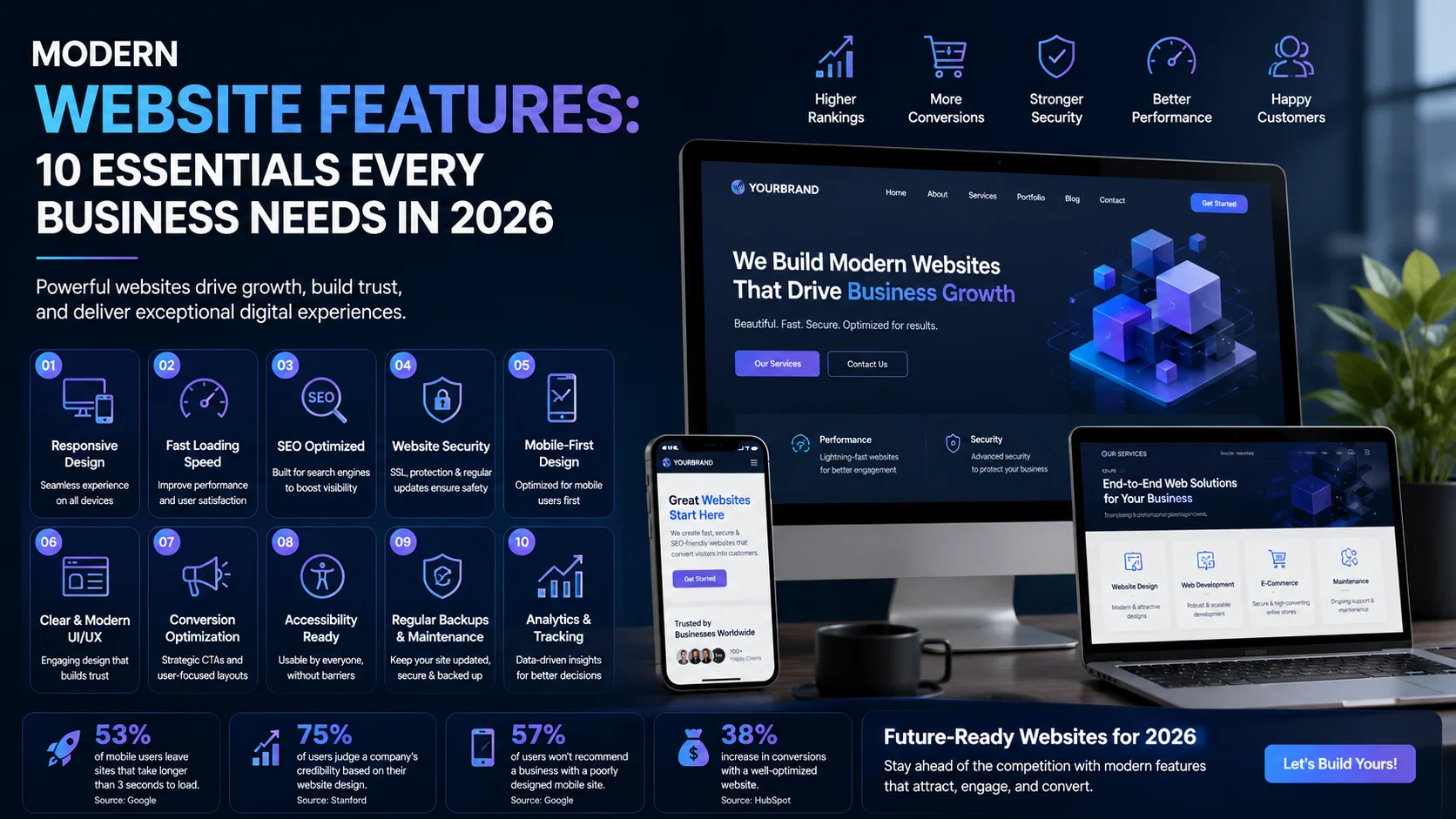
In 2026, your website is no longer just a digital brochure — it is often the first interaction customers, investors, and business partners have with your brand. Businesses with outdated websites risk losing credibility, search visibility, and valuable conversions before visitors even engage with their services.
Today’s users expect websites to be fast, secure, mobile-friendly, visually modern, and optimized for seamless user experiences across all devices. Businesses that fail to meet these expectations often struggle with higher bounce rates, lower search rankings, and declining customer trust.
That’s why investing in modern website features is essential for long-term business growth. A modern business website should not only look professional but also function as a high-performance lead generation and customer engagement platform.
At Digitize Info System, we help businesses build scalable, SEO-friendly, and conversion-focused websites through professional web development services, advanced UI/UX systems, and enterprise-grade digital solutions.
Why Modern Website Features Matter in 2026
Business buyers and consumers increasingly rely on websites to evaluate brands before making purchasing decisions. According to HubSpot’s marketing research, most buyers prefer learning about businesses through websites rather than advertisements.
If your website:
- Loads slowly
- Looks outdated
- Performs poorly on mobile devices
- Lacks trust indicators
- Feels difficult to navigate
…visitors are likely to leave within seconds.
Businesses investing in modern website features consistently experience:
- Higher conversion rates
- Better SEO rankings
- Improved customer trust
- Longer user engagement
- Increased lead generation
- Stronger brand authority
1. Mobile-First Responsive Design
Mobile devices now dominate global internet traffic, making responsive design a non-negotiable requirement in 2026.
Modern websites must automatically adapt across:
- Smartphones
- Tablets
- Laptops
- Desktop screens
- Large displays
Google’s mobile-first indexing also means search rankings heavily depend on mobile usability and performance.
Benefits of Responsive Website Design
- Better mobile user experience
- Improved SEO performance
- Higher engagement rates
- Lower bounce rates
- Increased mobile conversions
Businesses investing in responsive UI/UX design services often see significant improvements in customer retention and lead generation.
2. Lightning-Fast Website Speed
Website speed directly impacts SEO rankings, conversions, and customer satisfaction.
Modern users expect websites to load within seconds. Even small delays can reduce conversions dramatically.
To improve speed, businesses should focus on:
- Optimized images
- Code minification
- Browser caching
- Content Delivery Networks (CDNs)
- Efficient hosting infrastructure
- Core Web Vitals optimization
Fast-loading websites improve user experiences while also supporting stronger organic search rankings.
3. Advanced Website Security
Cybersecurity threats continue to increase globally, making website security one of the most important modern website features for businesses in 2026.
A secure website protects:
- Customer data
- Payment information
- Business operations
- Brand reputation
Essential Website Security Features
- HTTPS and SSL certificates
- Firewall protection
- Malware scanning
- Regular security updates
- Two-factor authentication
- Automated backups
- Server hardening
Businesses requiring enterprise-level protection often combine website security with professional server support services.
4. SEO-Friendly Website Structure
Search engine visibility remains essential for long-term business growth.
An SEO-friendly website architecture helps businesses improve discoverability across Google, AI search engines, and voice search platforms.
Important SEO Website Features
- Clean URL structures
- Structured schema markup
- Fast indexing support
- Optimized metadata
- Internal linking strategy
- XML sitemaps
- Mobile optimization
Businesses looking to improve rankings and organic visibility can benefit from professional SEO services.
5. Easy-to-Manage Content Management System (CMS)
Modern businesses need websites that can be updated quickly without depending on developers for every content change.
Popular CMS platforms include:
- WordPress
- Laravel-based admin systems
- Custom enterprise dashboards
- Headless CMS platforms
A flexible CMS allows marketing teams and administrators to:
- Publish blog content
- Update service pages
- Manage SEO settings
- Create landing pages
- Upload media assets
This improves operational efficiency and reduces long-term maintenance costs.
6. Conversion-Focused Website Design
A modern website should function as a business growth tool — not just a visual presentation.
Conversion-focused design helps turn visitors into leads, customers, or subscribers.
High-Converting Website Features
- Clear call-to-action buttons
- Optimized landing pages
- Lead generation forms
- Interactive user flows
- Trust-building sections
- Strategic content placement
Businesses with conversion-focused websites typically achieve better ROI from marketing campaigns and organic traffic.
7. Accessibility and Inclusive Design
Accessibility has become both a legal and ethical requirement for modern websites.
Websites designed according to accessibility standards improve usability for all visitors, including users with disabilities.
Accessibility Features Every Website Should Include
- Alt text for images
- Keyboard navigation support
- Readable font sizes
- Color contrast optimization
- Screen reader compatibility
- Accessible form structures
Inclusive websites help businesses expand audience reach and improve overall user experience.
8. Integrated Analytics and User Tracking
Modern businesses rely heavily on data-driven decision-making.
Integrated analytics systems help companies understand:
- User behavior
- Traffic sources
- Conversion performance
- Customer journeys
- Marketing ROI
Popular Analytics Tools
- Google Analytics 4
- Microsoft Clarity
- Hotjar heatmaps
- Conversion tracking systems
- CRM analytics dashboards
These tools help businesses continuously optimize performance and improve customer experiences.
9. Scalability and Future-Ready Infrastructure
Business websites must be designed to scale alongside future growth.
Modern websites should support:
- Cloud infrastructure
- API integrations
- CRM connectivity
- ERP integrations
- Mobile applications
- AI automation systems
Scalable architecture ensures businesses can expand digital operations without rebuilding their platforms from scratch.
Businesses requiring enterprise-level scalability often invest in advanced web portal development solutions.
10. Social Proof and Trust Signals
Trust remains one of the most important conversion factors in digital business.
Modern websites should include strong trust-building elements such as:
- Client testimonials
- Google reviews
- Case studies
- Industry certifications
- Client logos
- Portfolio showcases
- Security badges
According to BrightLocal research, online reviews strongly influence purchasing decisions and brand trust.
Decision Framework for Business Owners
If you are evaluating your current website, ask these important questions:
- Does the website load within 2 seconds?
- Is it fully mobile responsive?
- Can your team update content easily?
- Does it support SEO best practices?
- Is the website secure and scalable?
- Does it help generate leads and conversions?
Warning Sign: If your website has not been redesigned or optimized within the last 3–5 years, it is likely underperforming in both user experience and search visibility.
Website Trends Shaping 2026 and Beyond
The next generation of websites will increasingly focus on intelligent automation, personalization, and immersive digital experiences.
Emerging Website Trends
- AI-powered personalization
- Voice search optimization
- AI chatbots and assistants
- Progressive Web Apps (PWAs)
- Sustainable cloud hosting
- Advanced automation workflows
- Privacy-focused user experiences
Forward-thinking businesses are already investing in these technologies to remain competitive in evolving digital markets.
Key Takeaways
- Modern website features are essential for business growth in 2026.
- Fast, secure, mobile-friendly websites improve SEO rankings and customer trust.
- Conversion-focused design helps businesses generate more leads and sales.
- Scalable infrastructure supports long-term digital growth.
- Future-ready websites provide competitive advantages in evolving markets.
Conclusion
In 2026, a modern business website is no longer optional — it is a critical business asset that directly impacts brand credibility, customer acquisition, and revenue growth.
Businesses that invest in modern website features gain stronger search visibility, improved customer experiences, and higher conversion potential compared to outdated competitors.
Whether you need a responsive corporate website, an enterprise portal, a scalable WooCommerce store, or a custom digital platform, investing in modern web technologies is essential for long-term success.
At Digitize Info System, we help businesses across healthcare, education, manufacturing, real estate, SaaS, and enterprise sectors build high-performance websites designed for growth and scalability.
Ready to Modernize Your Website for 2026?
Partner with Digitize Info System to build a fast, secure, scalable, and conversion-focused website designed for long-term business success.
Frequently Asked Questions
Essential website features for businesses in 2026 include mobile responsiveness, fast page speed, strong security, and modern design. Together, these features help websites serve as effective first impressions for customers and partners.
They also create the foundation for better engagement, trust, and conversion across digital channels.
A modern website supports credibility and conversions by presenting clear messaging, easy navigation, and attractive visuals. When visitors find the information they need quickly and the experience feels professional, they are more likely to act.
That improved trust can directly influence lead generation, sales inquiries, and customer retention.
Security is still a top priority because it protects both customer data and business reputation. Modern website features must include secure hosting, SSL, regular updates, and strong access controls to prevent breaches.
A secure site also helps retain customer trust and avoids the disruptions and costs associated with security incidents.
A truly modern website goes beyond visuals by providing fast performance, accessibility, and seamless user journeys. It should also be easy to manage, support personalised experiences, and integrate with marketing and analytics tools.
This combination makes the website more useful for both customers and business teams, supporting ongoing growth and adaptation.
