
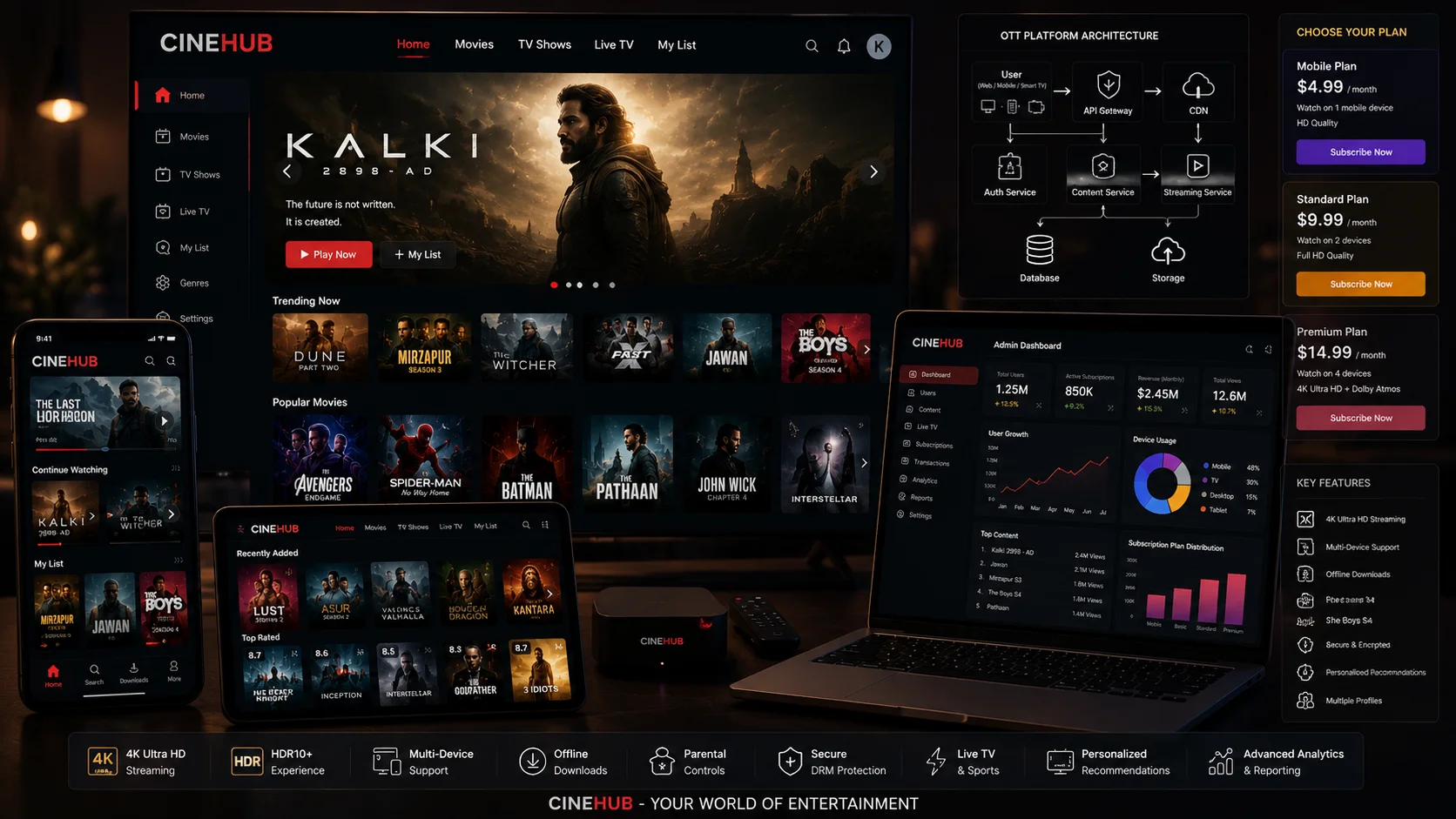
OTT platform development was the core focus behind the CineHub project, a scalable online streaming platform designed for movies and TV shows. The goal was to build a modern, secure, and highly responsive OTT ecosystem capable of delivering seamless streaming experiences across multiple devices and regions.
At Digitize Info System, we engineered CineHub as a user-centric OTT platform that combines intuitive navigation, advanced streaming security, responsive design, subscription management, and intelligent content tracking.
The platform was designed not only for entertainment delivery but also for operational scalability, analytics tracking, and enterprise-level streaming security management.
Overview of the CineHub OTT Platform Development Project
CineHub is a fully customized OTT (Over The Top) streaming platform that enables users to watch movies and TV shows online through a clean and intuitive interface.
The OTT platform development strategy focused heavily on:
- Fast and responsive streaming experiences
- Cross-device accessibility
- Advanced streaming security
- Scalable backend architecture
- Centralized administration controls
- Third-party movie data integrations
- Subscription-based content delivery
The platform supports users across:
- Desktop systems
- Laptops
- Mobile devices
- Tablets
- Smart TVs
- Various browser environments
OTT Platform Development Objectives
The primary objective of the CineHub OTT platform development project was to create a high-performance streaming ecosystem that remains simple for end users while providing enterprise-grade control for administrators.
User Experience Goals
The frontend streaming experience needed to be:
- Fast loading
- Easy to navigate
- Mobile responsive
- Visually modern
- Content-focused
Users needed to discover movies and TV shows quickly without complicated navigation structures.
Streaming Security Objectives
Security was one of the most important areas of the OTT platform development process.
The platform required advanced rules capable of:
- Restricting access based on geography
- Blocking unauthorized usage
- Managing free viewing limits
- Securing streaming APIs
- Preventing unauthorized content access
Administrative Management Goals
Administrators needed full control over the platform through a centralized management system.
The admin dashboard was designed to:
- Manage movies and TV shows
- Track user behavior
- Monitor streaming activities
- Manage subscriptions
- Configure security rules
- Control regional restrictions
Technical Scope of the OTT Platform Development
The CineHub OTT platform development project involved building a complete streaming ecosystem with scalable architecture and intelligent automation features.
Movie and TV Show Streaming Platform
The core platform was engineered to support:
- Movie streaming
- TV show streaming
- Dynamic content categorization
- Content recommendation structures
- Responsive media rendering
- High-quality video playback
Advanced Visitor and Usage Tracking
The OTT platform included centralized analytics and visitor tracking systems capable of monitoring:
- User visits
- Content popularity
- Streaming behavior
- Device usage
- Viewing patterns
- Regional traffic activity
These analytics helped administrators make data-driven decisions and optimize user engagement strategies.
Third-Party Data Integrations
One of the advanced features of the OTT platform development was automatic movie and TV show data synchronization using IMDb IDs.
Through third-party integrations, the system could automatically fetch:
- Movie titles
- Descriptions
- Ratings
- Posters
- Metadata
- Release information
This automation significantly reduced manual content management workloads.
Responsive OTT Platform Design
Responsive frontend development was essential because users accessed the platform from multiple device types.
The platform was optimized for:
- Smart TVs
- Mobile phones
- Desktop browsers
- Tablet devices
- Wide-screen displays
The responsive streaming experience ensured consistent usability across all platforms.
Streaming Quality Optimization
The system intelligently suggested optimal video quality based on:
- Internet speed
- Device type
- Connection stability
- Bandwidth availability
This helped improve streaming reliability and reduce buffering issues.
Expert Team Behind the OTT Platform Development
Delivering a secure and scalable OTT platform required a specialized multidisciplinary development team.
- Project Manager: Managed timelines, coordination, and delivery processes.
- Business Analyst: Mapped streaming workflows and operational requirements.
- UI/UX Designer: Designed modern user interfaces optimized for media consumption.
- Senior Developers: Engineered scalable backend systems and streaming architecture.
- Junior Developers: Assisted with frontend implementation and integrations.
- QA Testers: Performed extensive testing across devices and streaming scenarios.
OTT Platform Development Timeline
The CineHub OTT platform development project followed a structured execution roadmap:
- Requirement Gathering: 2 Weeks
- Platform Analysis: 3 Weeks
- Platform Development & Testing: 4 Months
- Third-Party Integrations: 3 Weeks
- User Training & Documentation: 1 Week
- Go-Live Deployment: 2 Days
- Post-Launch Support: Ongoing
Major Challenges Faced During OTT Platform Development
Managing Large Streaming Data
The platform targeted large entertainment libraries focused mainly on Hollywood and Bollywood content.
Managing massive content databases while maintaining speed and search efficiency required optimized backend architecture.
Streaming Security Implementation
Security implementation was one of the most technically demanding aspects of the project.
The platform supported advanced restriction systems capable of blocking:
- IP addresses
- Countries
- Cities
- Regions
- Internet service providers
- Domains
- Connection types
These security rules helped prevent unauthorized content access and improve compliance management.
Securing Streaming APIs
Streaming APIs required advanced protection mechanisms to secure video delivery and prevent unauthorized streaming access.
We implemented:
- Tokenized access systems
- Authentication layers
- Access validation
- Session monitoring
- Streaming request filtering
Cross-Platform Compatibility Testing
Testing the OTT platform across Smart TVs, mobile devices, browsers, and operating systems required extensive compatibility validation.
The platform underwent rigorous multi-device testing to ensure stable streaming performance.
Project Outcomes and Business Results
The CineHub OTT platform development project successfully achieved its technical and business objectives.
- Successful OTT Platform Launch: Delivered a stable and scalable movie streaming ecosystem.
- Centralized Visitor Analytics: Enabled advanced user activity tracking and monitoring.
- Advanced Security Controls: Successfully implemented sophisticated request blocking and protection systems.
- Cross-Platform Accessibility: Eliminated browser dependency and improved multi-device streaming experiences.
- Positive User Feedback: Users and administrators responded positively after launch.
- On-Time Delivery: The project was completed within the planned budget and timeline.
How Digitize Info System Builds Scalable OTT Platforms
At Digitize Info System, we specialize in OTT platform development, video streaming solutions, enterprise web applications, and scalable digital ecosystems.
Our OTT development expertise includes:
- Video streaming platforms
- Subscription management systems
- Streaming API security
- Responsive OTT applications
- Admin dashboard systems
- Cloud-ready streaming architecture
- Media content automation
- Cross-platform streaming optimization
Explore our
Web Portal Development Services,
Mobile Application Development Services, and
UI/UX Designing Services
to learn how we build scalable digital platforms.
Project References and Demonstrations
View the complete project presentation:
OTT Platform Development Slideshow
Watch platform demonstrations:
Businesses interested in streaming optimization strategies can also explore
MDN Web Media Technologies
for modern streaming architecture references.
Conclusion
This CineHub OTT platform development case study demonstrates how scalable streaming ecosystems can combine modern UI/UX, advanced streaming security, intelligent content automation, and responsive multi-device experiences into a unified digital entertainment platform.
By implementing enterprise-grade security, scalable backend architecture, centralized analytics, and responsive streaming interfaces, we successfully delivered a modern OTT platform capable of supporting long-term growth and user engagement.
At Digitize Info System, we continue helping businesses build secure and scalable OTT platforms, streaming applications, and enterprise digital ecosystems tailored to evolving user expectations.
Planning to Build a Custom OTT Platform?
Looking to launch a secure and scalable movie or TV streaming platform for your business?
Contact Digitize Info System today
to discuss your OTT platform development requirements.
Frequently Asked Questions
The CineHub OTT platform is a strong streaming solution because it combines scalable performance with a user-focused interface. It supports movies and TV shows across multiple devices, making it easy for viewers to access content seamlessly wherever they are.
This kind of platform is valuable for businesses that need a reliable streaming experience and the flexibility to deliver media globally with consistent quality.
An OTT platform handles regional content delivery and security through CDN support, geo-restrictions, and encrypted streaming. These features ensure that viewers receive content quickly while protecting copyrighted media and meeting regional licensing requirements.
For businesses, this means they can expand into new markets without sacrificing performance or compliance.
User experience is critical for streaming services because viewers expect easy content discovery, fast playback, and intuitive navigation. A smooth experience reduces churn and encourages viewers to return frequently, which is essential for building a loyal audience.
When the platform prioritises UX, it can also increase engagement and make features like recommendations, search, and personalized content more effective.
Businesses should look for partners with experience building secure, responsive OTT platforms and integrating with payment, analytics, and content management systems. A strong development partner should also understand the complexities of streaming media and audience engagement.
It is important to choose a team that can support the platform’s launch and future growth, helping the service remain competitive as viewer expectations evolve.
CineHub used a modular architecture with separate services for user management, subscriptions, content catalogs, and playback. This design allowed independent scaling as traffic increased across regions and devices.
The platform enforced access controls, secure session handling, and protected media delivery workflows to reduce unauthorized access. Content availability was tied to subscription state and user permissions.
Yes, with region-aware delivery, optimized playback pipelines, and scalable backend services. A staged performance strategy ensures stable streaming quality as traffic grows across new markets.
