
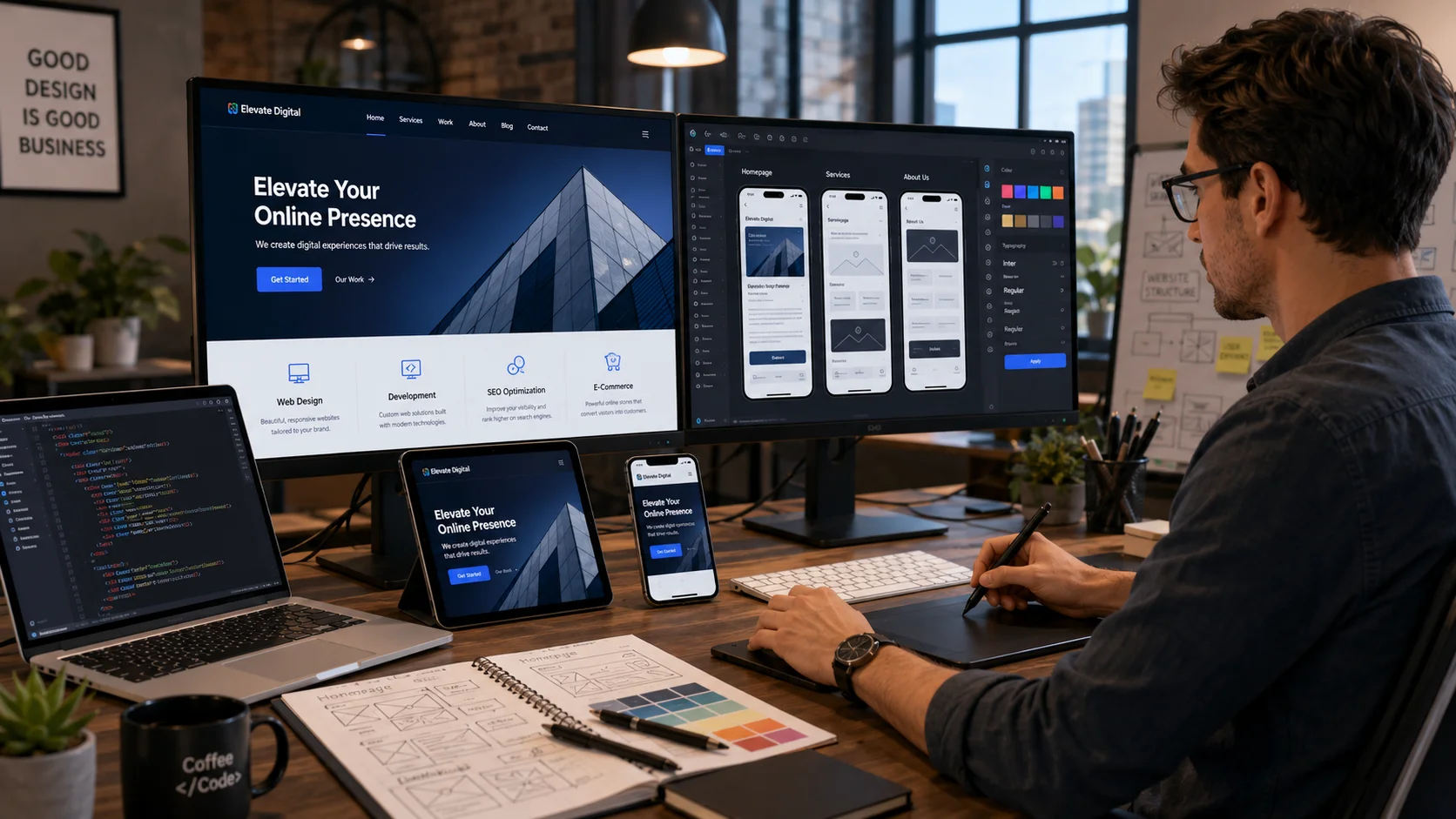
Web designing is one of the most important components of building a successful online presence in today’s digital world. A professionally designed website not only improves visual appeal but also enhances user experience, strengthens brand credibility, and supports business growth.
Whether you are running a startup, SME, enterprise, eCommerce store, or service-based business, understanding what web designing is and how it works can help you create a strong digital foundation for long-term success.
What is Web Designing?
Web designing is the process of planning, conceptualizing, and creating the visual structure and user experience of a website. It combines creativity, technology, branding, and usability principles to develop websites that are visually attractive, functional, responsive, and user-friendly.
Web designing includes multiple elements such as:
- Website layout and structure
- User interface (UI) design
- User experience (UX) optimization
- Typography and color schemes
- Navigation systems
- Graphics and multimedia integration
- Responsive design
- Mobile optimization
- Conversion-focused design
The goal of web designing is to create websites that not only look professional but also help users interact with content and services efficiently.
How Web Designing Works
Web designing works through a structured process that combines business goals, user behavior analysis, UI/UX planning, visual design, and frontend implementation.
Understanding Business Requirements
The first step in web designing is understanding the business objectives, target audience, branding requirements, and website goals.
This stage often includes:
- Business analysis
- Industry research
- Competitor analysis
- User behavior understanding
- Feature planning
Wireframing and Layout Planning
Before actual design begins, designers create wireframes and layout structures that define:
- Page hierarchy
- Navigation flow
- Content placement
- User interaction flow
- Call-to-action positioning
This helps ensure the website structure is user-friendly and conversion-focused.
User Interface (UI) Design
User Interface design focuses on the visual appearance of the website. It includes:
- Color palettes
- Typography
- Buttons and forms
- Icons and graphics
- Spacing and alignment
- Visual consistency
Professional UI design creates a modern and visually appealing experience that reflects the business brand identity.
Businesses looking for modern UI-focused websites often invest in professional
UI/UX Designing Services.
User Experience (UX) Optimization
User Experience design focuses on improving usability, accessibility, and overall interaction quality.
A good UX strategy ensures that visitors can:
- Navigate the website easily
- Find information quickly
- Interact smoothly across devices
- Complete actions efficiently
- Enjoy a frustration-free browsing experience
Strong UX design directly improves customer engagement, conversions, and retention.
Frontend Development Integration
Once the design is finalized, frontend developers convert the design into a functional website using technologies such as:
- HTML5
- CSS3
- JavaScript
- React.js
- Vue.js
- Bootstrap
This stage transforms visual concepts into responsive and interactive web pages.
Why Web Designing is Important for Businesses
Professional web designing plays a major role in business success because websites are often the first interaction customers have with a brand.
Professional Brand Image
A professionally designed website creates a strong first impression and improves business credibility.
Your website reflects:
- Brand identity
- Professionalism
- Business quality
- Trustworthiness
- Market positioning
Visitors are more likely to trust businesses that have clean, modern, and well-structured websites.
Enhanced User Experience
Web designing improves usability and accessibility by creating intuitive website structures and responsive interfaces.
When users can easily navigate your website, they are more likely to:
- Spend more time on your website
- Explore services and products
- Contact your business
- Complete purchases or inquiries
Better Communication with Customers
A well-designed website communicates business information clearly and effectively.
Using strategic layouts, visual hierarchy, and compelling content, businesses can highlight:
- Products and services
- Unique value propositions
- Customer benefits
- Business expertise
- Call-to-action sections
This improves customer understanding and increases engagement opportunities.
Web Designing and SEO Optimization
Web designing and SEO are closely connected. Search engines prioritize websites that offer good structure, fast performance, mobile responsiveness, and positive user experiences.
SEO-friendly web designing includes:
- Mobile responsiveness
- Fast loading speed
- Clean code structure
- Optimized navigation
- Image optimization
- Schema-friendly layouts
- Proper heading structure
- Internal linking strategy
Businesses that combine professional web design with
SEO Services often achieve better search engine rankings and stronger online visibility.
For official web performance and accessibility standards, businesses can also refer to
Google Web.dev.
Responsive and Mobile-Friendly Web Designing
Modern websites must function seamlessly across desktops, tablets, and smartphones.
Responsive web designing ensures that websites automatically adjust layouts, images, and content according to screen sizes and device resolutions.
Responsive design helps businesses:
- Improve mobile usability
- Reach wider audiences
- Reduce bounce rates
- Improve SEO rankings
- Increase customer engagement
With mobile traffic dominating internet usage, responsive web designing has become a necessity rather than an option.
Web Designing vs Web Development
Many people confuse web designing with web development, but both serve different purposes.
Web Designing
Focuses on:
- Visual appearance
- User experience
- Website layout
- Branding
- User interactions
Web Development
Focuses on:
- Website functionality
- Backend systems
- Databases
- Server logic
- Application integrations
Businesses requiring scalable and custom website systems often combine web designing with professional
Web Portal Development Services.
Benefits of Professional Web Designing
Higher Conversion Rates
Conversion-focused web design helps turn visitors into customers by improving usability and strategic call-to-action placement.
Improved Website Performance
Optimized website structures improve loading speed, responsiveness, and browsing efficiency.
Competitive Advantage
Modern and professionally designed websites help businesses stand out in competitive digital markets.
Scalable Digital Presence
Professional web designing allows businesses to expand features, content, and functionality as they grow.
Common Elements of Modern Web Designing
- Minimal and clean layouts
- Fast-loading pages
- Interactive UI components
- Responsive frameworks
- SEO-friendly architecture
- Conversion-focused design
- Accessibility optimization
- Professional typography
- Strong visual hierarchy
Industries That Benefit from Professional Web Designing
Almost every industry benefits from modern web designing, including:
- Healthcare
- Finance and fintech
- Manufacturing
- Education
- eCommerce
- Real estate
- SaaS platforms
- Tourism and hospitality
- Corporate enterprises
Conclusion
Understanding what web designing is and how it works is essential for businesses aiming to build a strong digital presence. Professional web designing combines aesthetics, usability, technology, SEO optimization, and responsive functionality to create websites that support business growth and customer engagement.
From improving brand image and user experience to increasing search visibility and conversions, web designing plays a critical role in modern business success. Investing in professional website design helps businesses stay competitive in today’s digital landscape.
Need Professional Web Designing Services?
Digitize Info System provides modern, responsive, SEO-friendly, and conversion-focused web designing solutions tailored to startups, SMEs, and enterprise businesses.
Our team specializes in UI/UX design, responsive websites, business portals, and scalable digital experiences that help businesses grow online.
Contact Us Today to discuss your web designing project requirements.
Frequently Asked Questions
Modern web design works best when it combines visual clarity, fast performance, and intuitive navigation. That means the site should present information clearly, guide visitors to the right actions, and look professional on both desktop and mobile screens.
Effective design also supports the brand story by using consistent colors, typography, and imagery. When these elements are aligned, the site builds trust quickly and encourages visitors to stay engaged long enough to explore the business’s services.
A well-designed website helps customers feel confident about a business before they make contact or buy. Clear layouts, readable text, and a polished presentation reduce friction and make it easier for visitors to understand the value of the products or services offered.
When design supports user needs — such as easy access to contact information and clearly labelled actions — it also increases the likelihood that visitors will convert. Trust is often shaped by first impressions, and good design makes that first impression count.
Design and user experience should work together so the website looks good and feels simple to use. Visual design creates the brand impression, while UX design maps the path visitors take through the site, ensuring content and calls to action appear logically and consistently.
This collaboration keeps visitors from getting lost or frustrated, which is especially important for service-driven businesses. The result is a site that is both memorable and easy to navigate, helping more users complete the actions that matter.
A full redesign is usually needed when the website no longer reflects the brand, the user journey is outdated, or major functionality has changed. A refresh can work for smaller updates, but if the site architecture, messaging, or technical foundation is limiting growth, a redesign is the better investment.
Choosing a redesign should be based on clear business goals, such as improving lead generation, updating the digital brand, or making the experience more mobile-friendly. That ensures the work is tied to measurable outcomes instead of cosmetic changes alone.
